


A Resilient Community:
- Just the Facts :: Why Build Resilience?
- Share

Just the Facts :: Why Build Resilience?
Why build resilience now? Because here's what we can't rely on ...
 Why you can trust us
2 MIN READ
Aug 14, 2010
Our Investments
We used home equity as an ATM to make up for falling wages. The family home was the greatest part of our net worth. Then the real estate bubble popped, and the money dried up. (The stock market lost 50 percent, too.)

Cheap Energy
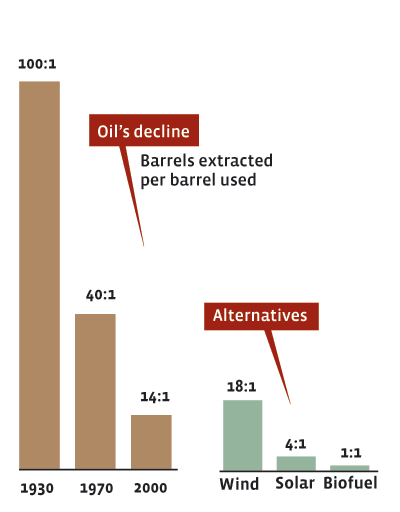
We depend on cheap energy for almost everything. Nothing yields the high return for energy invested we got from the easy-to-reach oil fields we’ve already used up.
It Takes Energy to Get Energy
A Stable Climate
As climate change escalates, weather disasters become more frequent and intense. In the past 50 years, events requiring federal aid have increased almost sixfold.

Oil
The Association for the Study of Peak Oil and Gas (ASPO) says peak oil is near—when production begins an Irreversible decline, spelling the end of our oil-crazy culture. Optimists, including the U.S. Energy Information Agency (EIA), predict rising production. But even if they’re right, the additional CO2 will accelerate climate change.
More Oil or Less Oil, We Have to Change

Kelly Shea researched and designed this fact sheet for A Resilient Community, the Fall 2010 issue of YES! Magazine. Kelly is an editorial assistant for YES! Magazine.