
Rebellions Work — and They Represent a Long Tradition


 Why you can trust us
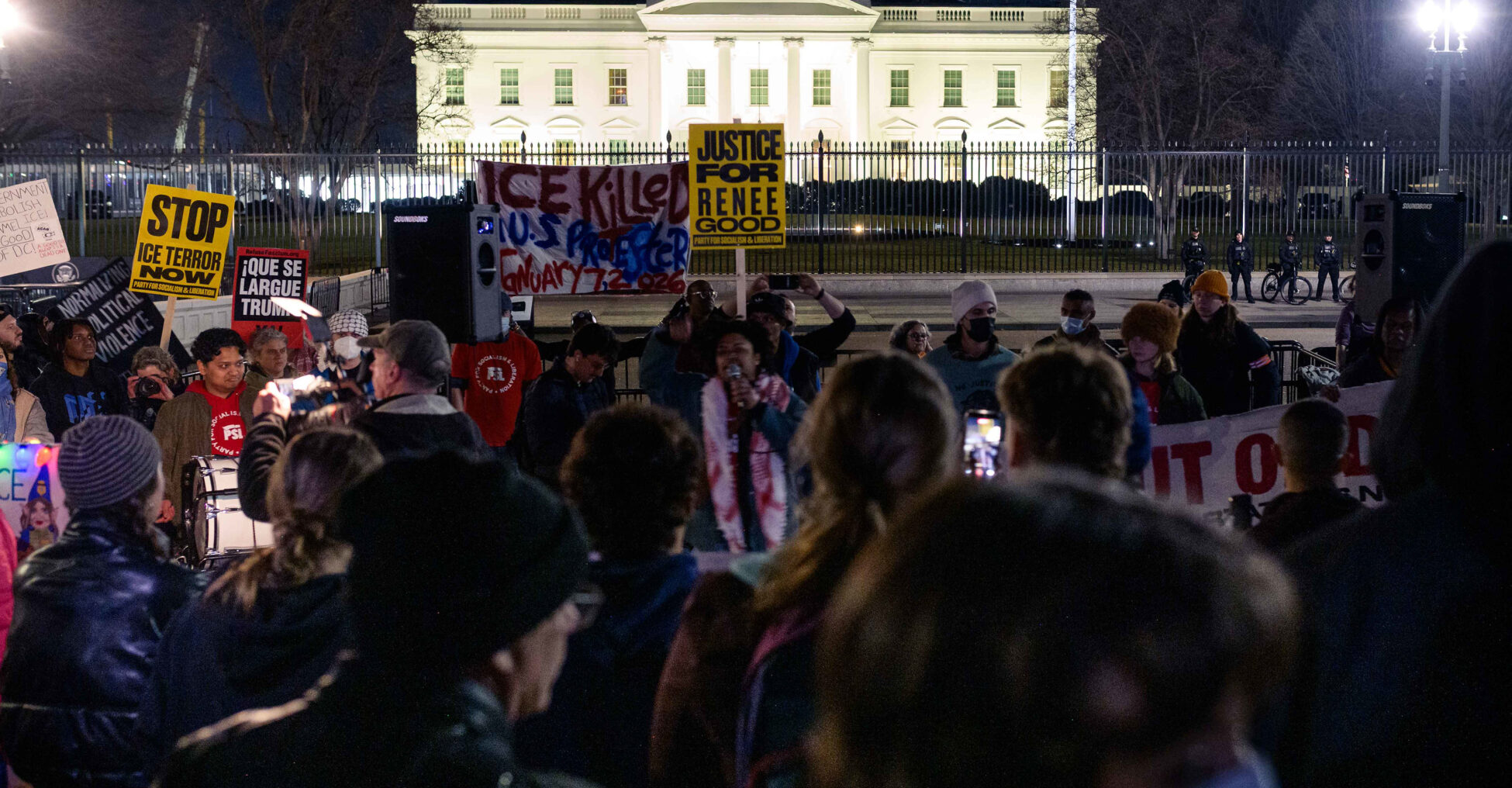
Thousands of people took to the streets over the weekend to protest the killing of Renee Nicole Good by ICE agent Jonathan Ross in Minneapolis. Good, 37, was shot several times while attempting to drive away from the site of a protest. Immigration enforcement is now facing renewed resistance across the country as Trump’s agents continue to harm, terrorize, and kill with impunity. Will the demonstrations catalyze a larger rebellion against ICE?
Historians of Black liberation movements have pointed out that large-scale acts of revolt were key to advancing freedom struggles. When we draw on this history, we tap into a long tradition of diverse, coalitional struggle which developed and advanced some of the most progressive ideas which the left celebrates and continues to fight for today. In the wake of the George Floyd uprising, Jamon Jordan reminded us, “Protest as an act of resistance to oppression is a staple of American culture; the very founding of the United States is connected to protest, which exists in myriad demonstrations”:
There were hundreds of rebellions during the period of slavery — some small, some major.
Rebellions worked.
Today’s protests are no different. They’re modern-day uprisings, or rebellions, and part of every era of U.S. history.
—Jamon Jordan
Read the full article: Rebellions Work
From the Archives: Organizing From the Heart
Channeling people’s anger into concrete efforts for change is a perennial preoccupation of the organizer. Newcomers to activism sometimes find that traditions of organizing from the last century lack the compassionate qualities that they are looking for in political spaces. As Sally Kohn wrote for YES! in 2013, “the advice that helped shape modern political organizing [was] not always the most effective approach for alliance building and mass public appeal.” Organizers in recent decades have responded by putting more emphasis on building relationships, community, and solidarity.
“The new generation of community organizers is adapting the antagonistic politics of the past and building bridges instead of burning them,” wrote Kohn.
Read the full article: A Caring Economy Requires Building Bridges — Not Burning Them
From the Archives: Amid the Plunder of Venezuela, How Can We Build Activist Coalitions to Counter Chevron?
Chevron’s lobbying seems to have paid off: Trump’s abduction of Maduro from Venezuela may benefit the oil giant with more access to the country’s oil fields. One could say that Chevron is fueling imperialism. But the company’s role in facilitating violence doesn’t stop there. Last year, Palestinian solidarity activists in Oregon launched a campaign connecting Chevron to Israel’s genocide in Gaza. Their organizing efforts linked apartheid with ecological destruction, resulting in broader coalitions.
“Climate organizations, like Oil Change International and some local chapters of Sunrise and 350, have supported the boycott and divestment campaigns, highlighting Chevron’s broader history of environmental catastrophes,” Ahmed wrote.
Such an example of coalition building may be useful for organizers today looking to build broad resistance against US intervention in Venezuela by linking it to the climate crisis and genocide.
Read the full article: Boycotting Chevron for Fueling Genocide
New Work by YES! Contributors
- Sonali Kolhatkar, former racial justice and civil liberties editor at YES! Magazine and the host of Rising Up With Sonali, chronicled the nationwide growth of grassroots resistance to ICE throughout 2025.
- David Korten, co-founder of YES!, reviewed a new book about the ruinous impacts of extreme inequality on every facet of our lives.
- Sarah van Gelder, founding editor of YES!, explains why the phenomenon of loneliness in our society is not an outcome of individual pathologies, but the product of our economic, political, and social systems – which we can change.
- Marianne Dhenin, former contributing writer at YES! Magazine, interviewed several disability justice organizers about their hopes and visions for struggle under the second year of Trump 2.0.
New Solutions Journalism From Independent Media
⚡ As Electricity Bills Rise, Activists Are Demanding Public Control of Utilities – Truthout
? Elbit Subsidiary Empties Out Raleigh Offices After Protest Campaign, Activists Say – Prism
? Inside the Fight To Unionize California’s Climbing Gyms – In These Times
?️ The American Peace Movement We Need Today – Waging Nonviolence
Rising Up With Sonali
In this new and terrifying start to the year, our hope lies not only in sustained activism, but independent, justice-oriented media. YES! Media’s broadcast arm, Rising Up With Sonali, is a hard-hitting program that offers solutions perspectives on news and politics via regular interviews with changemakers on the frontlines of social justice. Spearheaded by YES!’s former senior editor Sonali Kolhatkar, this project is sustained entirely through subscribers at a very low monthly rate of only $4.
Currently, Rising Up With Sonali has just about 400 paying subscribers. Doubling that number will get the show well on its way to sustainable independence. You can subscribe to Rising Up With Sonali here.
The Heart of Resistance
As we come to the end of another YES! edition, we’re reflecting on the need to not only resist injustice, but to also build solidarity with love and care. Nurturing connections and community strengthens movements in the short term – and makes it possible to sustain the work over the long haul.
Please share this newsletter with others and encourage them to subscribe. Our next edition from the YES! digital archives will be sent in February.
If you’re excited about this continuation of the YES! tradition and want to support the newsletter, please consider making a small one-time or monthly donation.
In solidarity,
t r u t h o u t
|
Truthout
hosts a monthly newsletter with relevant content from the YES! digital archives and new solutions journalism from a variety of publications. These curated resources can help us imagine – and build – movements for transformation.
|