Bringing Our Kids Back to Just Schools


 Why you can trust us
It’s hard to believe that it’s already been a year since we launched the YES! newsletter! We’re heartened by the support we’ve received and are so grateful to everyone who has stepped up to make a donation. If you haven’t donated yet, the best way you can support our work is with a small monthly donation. Even a monthly gift of a few dollars will help us produce this newsletter and keep the legacy of this legendary independent publisher alive.
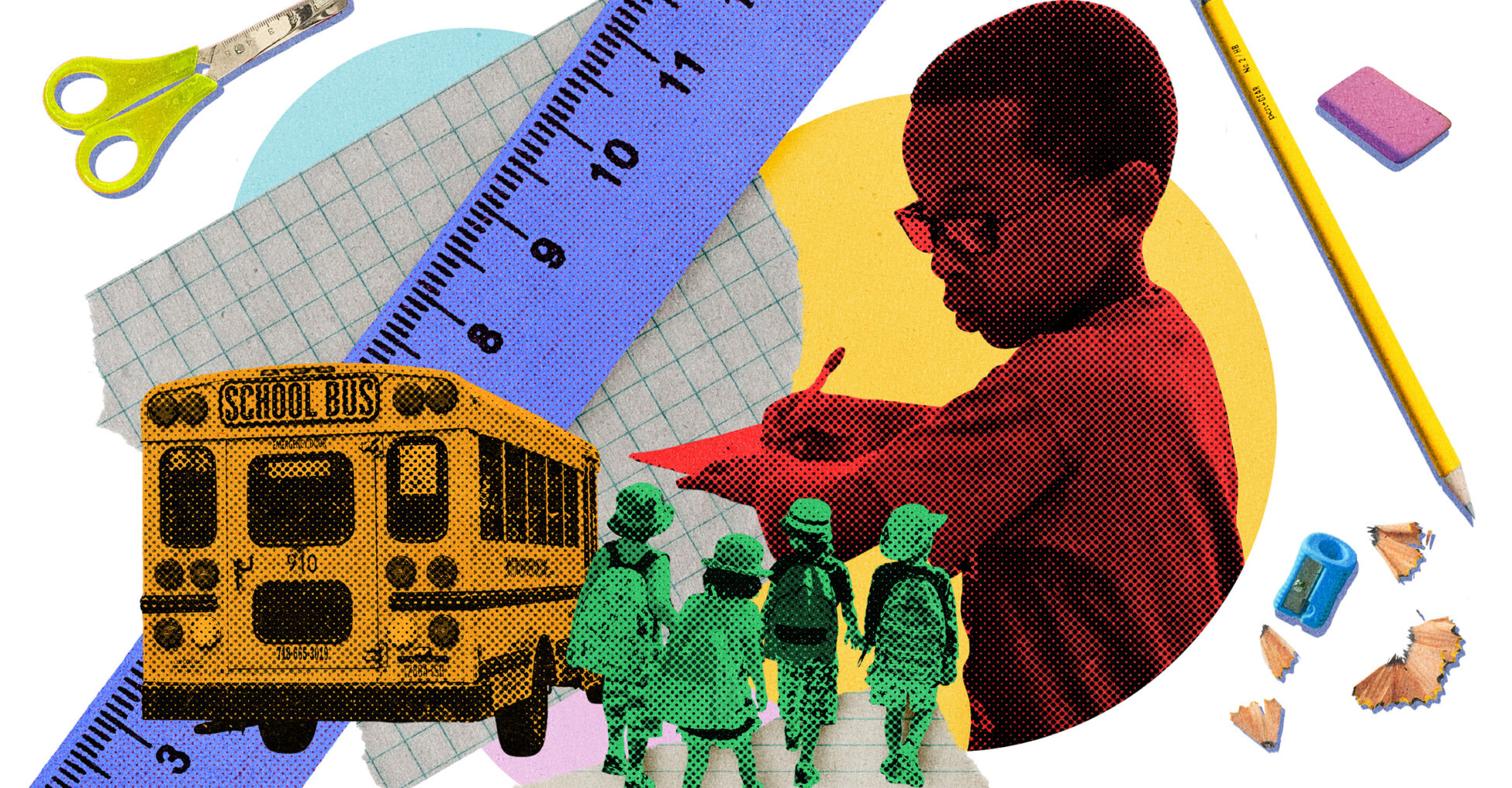
Since Donald Trump took office again, public schools, many of which were already severely struggling, have faced increasing challenges. The administration’s education policy has aimed to defund public schools in favor of private institutions; sanitize curriculum and replace critical thinking with a “patriotic,” white supremacist vision of society; and eliminate practices that protect vulnerable children like immigrants, trans youth, and working-class youth. From attacks on teaching Black history, to ICE raids on campuses, students’ bodies and minds are under threat.
Lack of resources, children’s safety, and culturally appropriate pedagogy have been perennial fronts of education justice struggles. So while Trump has undoubtedly intensified and broadened the scope of these problems, it’s important to recognize that they predated his administration — and so have community-led efforts to address them, many of which did not wait for the results of elections and ascendance of elected officials to change the situation.
Starting in 2019, the Black Organizing Project (BOP) in Oakland organized a coalition of parents, students, and other supporters to rid their schools of police officers, who had long served as a funnel into the school-to-prison pipeline. Public support for the BOP campaign accelerated in the wake of the George Floyd uprisings, resulting in the eventual passage of the George Floyd Resolution for Police-Free Schools, named after the Black man killed by Minnesota police in May 2020.
Writing for YES! in 2024, BOP organizer Malaika Parker explained that “the George Floyd resolution did not come about because elected officials agreed to far-reaching reforms. It was the result of a movement led by those most impacted for justice based on years of organizing and community leadership”:
Our progress in Oakland has shown us what works to transform local systems that punish Black youth and communities of color: Put young people, parents, and community members at the center of the work. Be bold and keep fighting for transformational change and not just incremental, feel-good actions. And claim every single community win. That is what will continue to inspire those who will come after us. That is what will ignite everyday, regular people to realize that we ourselves have the power to shift, change, and transform.
–Malaika Parker
Read the full article: How Black Parents Got Cops Out of Oakland Schools
From the Archives: How Educators Are Working to Compassionately Address Trauma
Efforts to address trauma in the classroom have grown as more educators and scientists have begun to understand the impacts of poverty, colonialism, discrimination, and other traumatic experiences on children.
Starting in 2009, public schools in many states with a high number of Native American students began to embrace trauma-informed approaches to help them thrive. Tanya H. Lee described the motivations behind this approach for YES! in 2018: “Schools like these are using trauma-sensitive practices to address children’s mental health, behavioral, and academic issues. The goal is to create schools where adults — from the principal to the lunch room personnel — consistently respond to children with empathy and compassion.”
Read the full article: How Native American Children Benefit From Trauma-Informed Schools
From the Archives: Children’s Futures as the Classroom’s Starting Point
Between the climate crisis, AI, and rapidly shifting global forces, today’s rising generation faces an ever more uncertain future — and these kids will become adults who will have to work to support themselves amid the tumult. Does this mean that the role of schooling is to prepare an obedient, submissive workforce that follows top-down directions in hard times, or can it be a means to encourage children to create a liberated, nurturing world from the ashes of crisis?
Writing for YES! in 2022, former public school teacher Ruben Abrahams Brosbe described alternative forms of education that could empower kids to create a better future for themselves if these models were made widely accessible: “It is exciting to imagine what would be possible if these models were freed from their exclusive silos and made more widely available to all young people in the United States. Imagine a generation of children given the chance to practice autonomy and creativity at school.”
Read the full article: To Transform Work, Start With Schools
New Work by YES! Contributors
- Sonali Kolhatkar, the host of Rising Up With Sonali, reports on how the federal government is withholding funding for immigrant children’s legal representation and diverting it to dubious alternatives.
- Marianne Dhenin reports on a movement that is building to stop New York state from investing in Israel Bonds.
New Solutions Journalism From Independent Media
? Organizing for Survival in an Era of Climate Chaos – Truthout
?️ Former Strikers Start Cooperative News Organization – In These Times
? Learning from COINTELPRO’s Survivors: Accountability and Repair – Convergence
⛪ Maryland Faith Leaders, Civil Rights Advocates Rally for Haitian Community Amid End of TPS – Prism
? US Communities Are Organizing to End Complicity With Genocide in Their Backyards – Waging Nonviolence
Rising Up With Sonali
From now until September 30, every purchase of Sonali Kolhatkar’s new book, Breaking ICE, through this link will get 3 months free membership to RisingUpWithSonali.com.
And, those who also buy Sonali’s last book, Talking About Abolition: A Police-Free World is Possible, will get 6 months free membership to Rising Up With Sonali.
Note: Please allow a few days after your purchase to activate your free membership.
Better Schools and Futures for Students Are Possible
We know what are the tools for building transformative schools — grassroots organizing, trauma-informed practices, nourishing pedagogy — but they must be in the hands of those who will most benefit from such a transformation. By building grassroots coalitions of youth, parents, community members, educators, and unions, we can work together not only to preserve what we have, but to imagine and build institutions that fuel a more just, liberatory, and hopeful future for our children.
|
Truthout
hosts a monthly newsletter with relevant content from the YES! digital archives and new solutions journalism from a variety of publications. These curated resources can help us imagine – and build – movements for transformation.
|